ANT CONTROL
Ants coming inside in Sydney spring: black house ants and coastal brown ants
After a cool start to the week, Sydney is warming up fast this Thursday - and that is exactly when ants start moving indoors. Trails of black house ants or coastal brown ants along skirting boards and kitchen benches are one of the most common spring calls we take. The fix is rarely about spraying the trail; it is about finding the colony and the route.
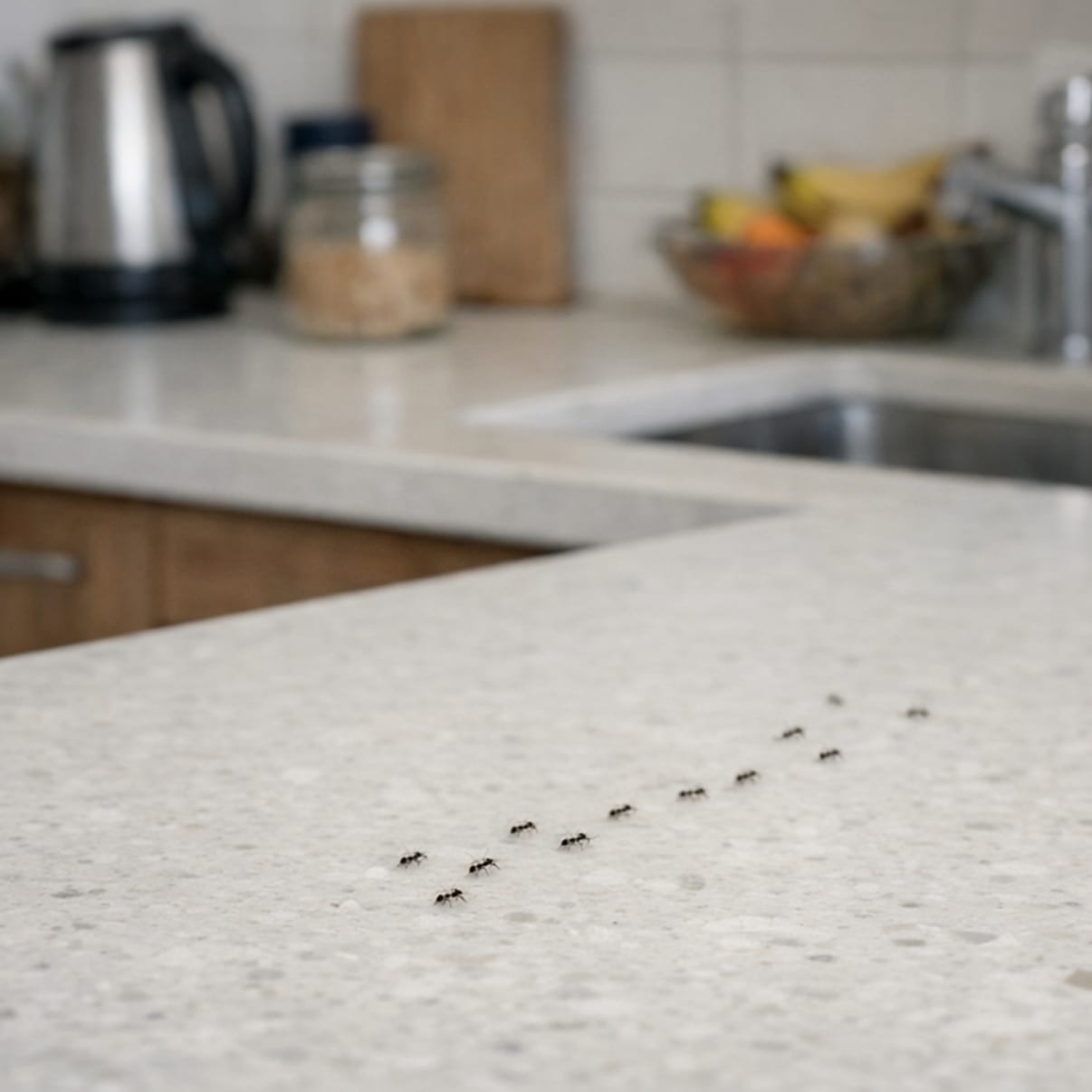
Ant activity inside a Sydney home in spring is almost always a foraging problem rather than a nest problem. The nest is usually outside - in the garden, under a slab, along a path or inside a retaining wall. What you see indoors is a trail of workers collecting food and water. Warmer days increase that foraging, and a wet night or two makes sheltered, drier routes through the building more attractive.
Why spring warming brings ants inside
This week is a good example. After a cool change and some overnight rain, Sydney is climbing back to the low twenties today, with warmer weather building into the weekend. Ant colonies respond to that in two ways: they expand foraging, and they seek stable moisture as the ground dries out. Kitchens, bathrooms and laundries offer both food and water, which is why that is where the trails almost always appear. If significant rain arrives later in the week - the forecast suggests it may - expect another push, because flooded outdoor nests relocate or move their workers along higher, drier routes that often run through wall cavities and slab edges.
A single trail of a dozen ants is normal spring activity. A persistent trail that reappears for days, or trails in multiple rooms, usually means a nest close to the building - that is the point at which treatment of the nest, not the trail, becomes the right step.
Black house ant or coastal brown ant?
Two species account for most indoor ant activity in Sydney homes, and telling them apart matters because their nests sit in different places.
- Black house ants (Ochetellus glaber) - small, dark brown-black ants that form long, tidy trails; they nest in soil, under pavers, in wall cavities and sometimes roof voids, and are strongly attracted to sweet foods, most common on kitchen benches and in pantries.
- Coastal brown ants (Pheidole megacephala) - light to reddish-brown ants with visibly larger-headed workers; they nest in soil near the slab and foundations, are aggressive colonisers that often displace other ant species in the garden, then move indoors in very large numbers.
If you can take a close photo of the workers, that is usually enough for a technician to identify the species. Colour alone is not reliable - lighting and age make ants look different - but size, head shape and trail behaviour are useful.
Reading the trail before you touch anything
Before cleaning or spraying, take two minutes to read the trail. It tells you where the entry point is and, roughly, where the nest sits.
- Where does the trail enter - door threshold, window frame, pipe penetration, gap under the skirting?
- Which direction are loaded ants moving? Heavily loaded ants are heading back to the nest.
- Is the trail single-file and tidy (typical of black house ants) or broad and scattered (typical of coastal brown ants)?
- Are there satellite trails branching off - for example to a pet bowl, bin or plant pot?
Photograph the entry point and the trail before you wipe it. That record is genuinely useful if the activity persists and a technician needs to see where the ants were coming in.
Break the route inside
Wipe trails with soapy water, not insect spray - spraying a trail kills a few workers and leaves the nest untouched.
Remove the food source: wipe benches, clear crumbs, empty bins and store food in sealed containers.
Dry sinks, pet bowls and plant saucers overnight - water is a powerful attractant in a dry week.
Seal the gaps you found: door seals, window frames and pipe penetrations are the common routes.
Keep an eye on the entry point for 48 hours and note whether the trail returns.
If you use a commercially labelled ant bait, follow the label exactly and place it only where children and pets cannot reach it. Baits work slowly by design - workers carry the product back to the nest. Spraying near a bait station will defeat it.
Reduce the attraction outside
The most durable fix is at the source. Ants nesting against the slab or along the garden edge will keep finding their way in while the route exists.
- Move mulch, garden beds and stored timber away from the slab edge where practical.
- Trim plants and creepers that touch the building - they act as bridges for trailing ants.
- Check irrigation and taps for leaks along the foundation; a damp soil line is an ant highway.
- Clear pet food left outside, and keep bins away from doorways.
Where a nest is close to the building - under pavers, along the slab or in a retaining wall - a targeted exterior treatment at the nest site is usually far more effective than repeated indoor spraying.
When to call for help
Call us if a trail keeps returning after you have removed food sources, dried the moisture and sealed obvious gaps, or if you are seeing trails in multiple rooms at once. That pattern usually points to a nest against or under the building, which needs locating and treating rather than more wiping. This is also the right time of year to deal with it: while colonies are still expanding in spring, a single targeted treatment resolves the problem more cleanly than waiting until summer heat pushes activity higher.
ANTS KEEP RETURNING?
Text your suburb and where the trails are entering.
Tell us which room, and whether you can see where they come in from outside.