COMMERCIAL & FOOD
Pest control in Sydney bakeries: the flour and closing routine
A bakery combines flour, sugar, warm dough and constant moisture with long hours and large dry-goods stores. The pests that matter most are the ones that arrive in flour and grain. A steady goods-in check, sealed storage, a clean closing routine and a documented monitoring program keep a Sydney bakery ahead of them.
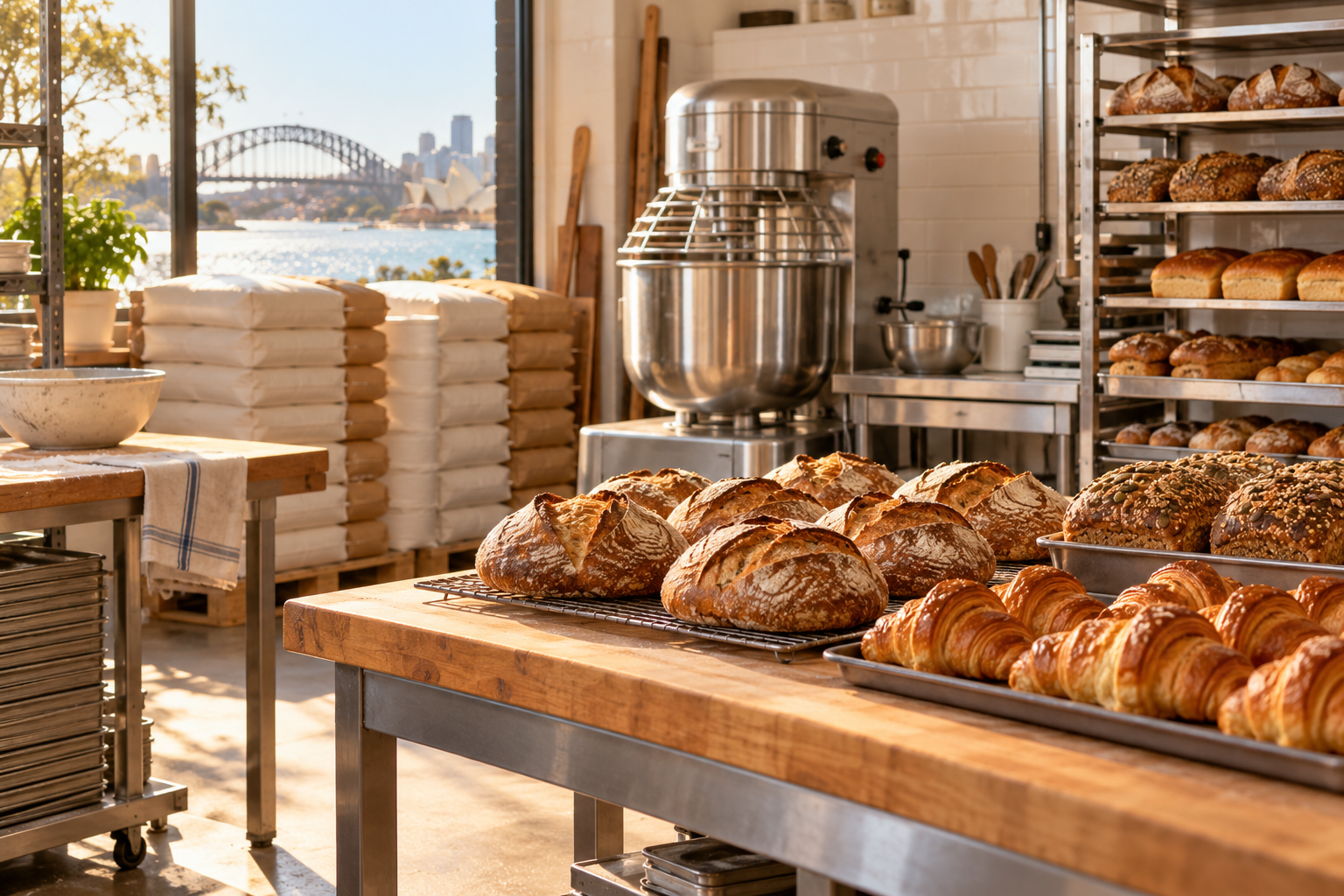
Sydney bakeries start early and work with flour, grain, sugar and warm dough all day. That creates a steady supply of fine dust, warmth and moisture, and a large store of dry ingredients for pests to live in. The good news is that a well-run bakery already sweeps, rotates stock and closes down methodically; the task is to make the goods-in check, the dry-goods store and the closing cleanup consistent and to keep a record of what is found.
Why a bakery is different from a cafe kitchen
A cafe is built around fresh food and a kitchen, but a bakery is built around dry ingredients. Flour dust settles into every gap, behind mixers and proofers and along shelving, and warm dough and proofing areas hold heat and moisture through the day. Many stored-product pests live their whole life inside a bag of flour or grain, so a problem can arrive with a delivery rather than through a door.
Because the product is dry and powdery, dampness is easy to miss until a bag is found clumped or smelling. For groups and franchised stores, a documented pest program with a site map and service log is also part of what is expected at audit, so the records matter as much as the treatment.
Late spring also raises the pace. The days are warming, deliveries and trade increase before summer, and a humid, showery spell can turn a damp bag of flour or a quiet spill into a breeding point within days. The same flour dust that is harmless in a cool, dry store becomes a risk where warmth and moisture meet, so tightening the store and the close now prevents a problem in the busiest season.
The pests to know
A walk from the goods-in door to the dry-goods store finds the risks that matter.
- Flour mites, the tiny pale mites that make flour look dusty or coated and give it a faint minty smell; they favour damp stock.
- Flour beetles and other grain beetles, small reddish-brown beetles found in flour, bran, cereal and spilled grain.
- Stored-food moths, whose webbing and larvae appear in open grain and cereal bags.
- Cockroaches, which shelter behind warm mixers, proofers and dishwashers.
- Rodents around the goods-in door and bins, and small flies in drains and fermenting residues.
Goods-in and dry-goods storage
Since many pests arrive inside packaging, the delivery check and the store do most of the prevention. A short, written routine keeps it consistent across staff.
Inspect flour, grain and cereal bags for holes, webbing, beetles or clumping.
Reject or quarantine damp or damaged stock rather than shelving it.
Decant dry goods into sealed, labelled containers and keep them off the floor and away from walls.
Rotate stock so older flour is used first and keep the store cool and dry.
When a bag is found open, torn or clumped, isolate it from the rest of the store rather than simply using it, since pests move easily between adjacent bags. A small quarantine shelf keeps suspect stock away from good stock and gives a clear place to check before a decision is made. That single habit stops one delivery from spreading through the whole dry-goods store.
The closing routine
Pests feed on what is left after the day, so the last hour of production does much of the work. A clean, dry close removes both the flour dust and the moisture pests need.
Sweep and vacuum flour dust from floors, shelving and behind equipment.
Leave no dough, sugar, egg mix or crumbs out overnight.
Flush and clean floor drains and wipe down wet prep areas.
Seal and remove waste and keep the bin area closed and drained.
Monitoring and records
Bakeries are best managed with monitoring rather than repeated spraying. Non-toxic monitors in the dry-goods store, behind equipment and near the goods-in door give early warning, and rodent devices are placed outside around the bins and perimeter so a treatment is targeted and timed.
Loose bait must never be placed where it can contact flour, dough, trays or packaging; every product used must be registered and applied to the current label, and the APVMA explains correct chemical use. A site plan, numbered devices and a log showing dates, findings and actions form the documented program an auditor can follow.
When to arrange a service
A scheduled program is cheaper and less disruptive than reacting to a sighting during production.
- Flour is found clumped, dusty or with a faint minty smell, or beetles and webbing keep appearing in the store.
- Cockroaches are seen behind warm equipment after closing, or rodents around the goods-in door and bins.
- A delivery repeatedly brings pests in and the source needs tracing.
- The group or auditor requires a documented program with a site map and service records.
- Small flies persist in the drains despite nightly cleaning.
A technician can map the risk points, set up numbered monitoring, train the closing team and keep the service log that protects the bakery and its reputation.
RUNNING A SYDNEY BAKERY?
Text your suburb, the kitchen and the dry-goods store.
Tell us whether you bake on site and how flour and grain are stored, and we can plan a documented program around your close.