HOME PEST PREVENTION
Termite alates in Sydney after the warm-up: what a dispersal flight means
After a wet week, the first warm, clear days of spring trigger termite dispersal flights across Sydney. A few winged insects near a window are not an emergency - but they are the right time to do a calm, structured check.
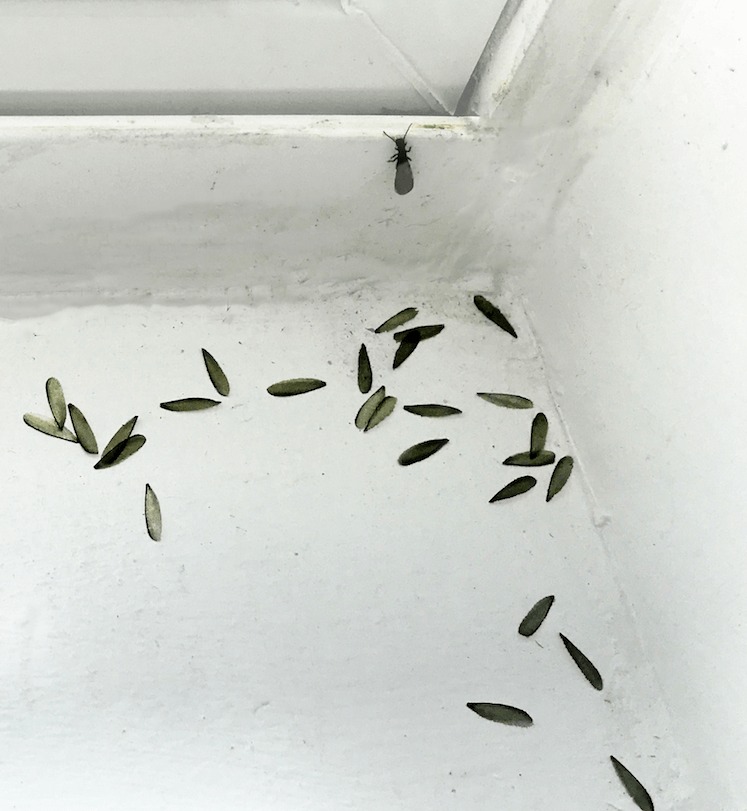
Photo: RCraig09 / Wikimedia Commons, CC BY-SA 4.0. Converted to JPEG; illustrative photograph taken in Maryland.

Termite alates are the winged, reproductive stage of termites, sometimes called flying termites or white ants. Each spring they leave mature colonies in large numbers on warm, humid days, usually after rain, to start new colonies. With showers forecast through Sunday and warmer days from Monday to Tuesday climbing to 24 and then 25 degrees, Sydney is moving into exactly the window when dispersal flights are most likely. Seeing a handful of alates is common and not a reason to panic; what matters is what you do in the day or two afterwards.
First, identify them calmly
Termite alates are often mistaken for flying ants, and the difference is easy to check. Alates have four wings of equal length and shape, a straight waist and pale, translucent wings that shed easily. Flying ants have a pinched waist, two smaller hind wings, and usually hold their wings after landing. When a termite swarm settles, you will typically find shed wings in piles on window sills, door thresholds and in spider webs nearby - that wing drop is the clearest sign a dispersal flight has happened.
Four equal-sized, pale wings that shed and collect in small piles.
Straight-sided body with no pinched waist, dark brown to black in colour.
Usually appear on warm, humid days after rain, in the late afternoon or evening.
Alates do not bite, sting or carry disease. They are not an emergency on their own.
Why the warm-up triggers flights
A dispersal flight is how termite colonies spread. Moisture keeps colonies healthy through a wet week, and then rising temperatures signal that conditions are right for new colonies to establish. That is why the strongest flights in Sydney spring follow rain followed by warm, still days - exactly the pattern forecast for this weekend and early next week. A swarm tells you there is at least one mature colony somewhere in the area, usually within a few hundred metres. It does not tell you that colony is in your house, which is why the next step is a calm check rather than an expensive reaction.
A dispersal flight near your home is a reminder to check, not a verdict. Most flights end with the alates dying quickly - very few survive to establish a colony. The useful response is the 24-hour check below, not spraying or fumigating on the strength of a swarm.
The 24-hour check
Sweep up shed wings and note where they collected - windows, doors and skylights tell you where the flight entered.
Walk the outside wall line and check for mud tubes: narrow, pencil-thick earthen tunnels running up foundations, brickwork or timber.
Check subfloor access, weep holes, the base of the garage door and any timber sitting on the ground.
Look for damaged or hollow-sounding timber only where it is safe and easy to reach - do not pry into unknown cavities.
The goal is to find signs of an established colony - mud tubes, damaged timber or large numbers of alates appearing indoors repeatedly - rather than to chase the alates themselves. Most properties that see a swarm show no colony signs at all.
Record what you find
Keep a simple note: the date, whether you saw a flight, where wings collected and anything unusual at the wall line. If you are on a pest plan with a scheduled inspection, pass this note to your technician. If you rent or live in a strata building, report shed wings or suspected mud tubes to the property manager or building manager with a photo and date, so the right people can arrange a licensed timber pest inspection.
If you choose a commercially labelled product, use it only for its intended setting and follow the current label exactly. The APVMA explains correct chemical use. Surface sprays will not fix a colony; a licensed inspection is the only reliable way to establish what is there.
When to get help
Book a licensed timber pest inspection if you find mud tubes, if alates keep appearing indoors from the same spot, or if you have not had a termite inspection for a year or two and this is the first swarm you have seen on the property. A technician who knows Sydney homes will check the wall line, subfloor and roof void, identify the species and the extent, and give you a clear next step - which may be a monitoring program rather than a treatment. That is a much better outcome than reacting to a swarm with panic or with products that cannot reach the colony.
SPOTTED TERMITE ALATES THIS WEEK?
Text your suburb, property type and what you found.
Tell us whether it was a small flight, shed wings inside or anything at the wall line, and we can confirm what is worth checking.