
GARDEN & PLANT
Aphids and scale on Sydney plants after warm, wet storm weather
Curled new leaves, tiny insects clustered on fresh shoots and a shiny film on the foliage usually point to sap-sucking pests such as aphids, scale and whiteflies rather than a disease. They are common in Sydney after warm, humid and stormy spring weather, and a healthy garden with its natural predators often keeps them in balance. The useful first step is to identify what is on the plant and check whether ants are protecting it.
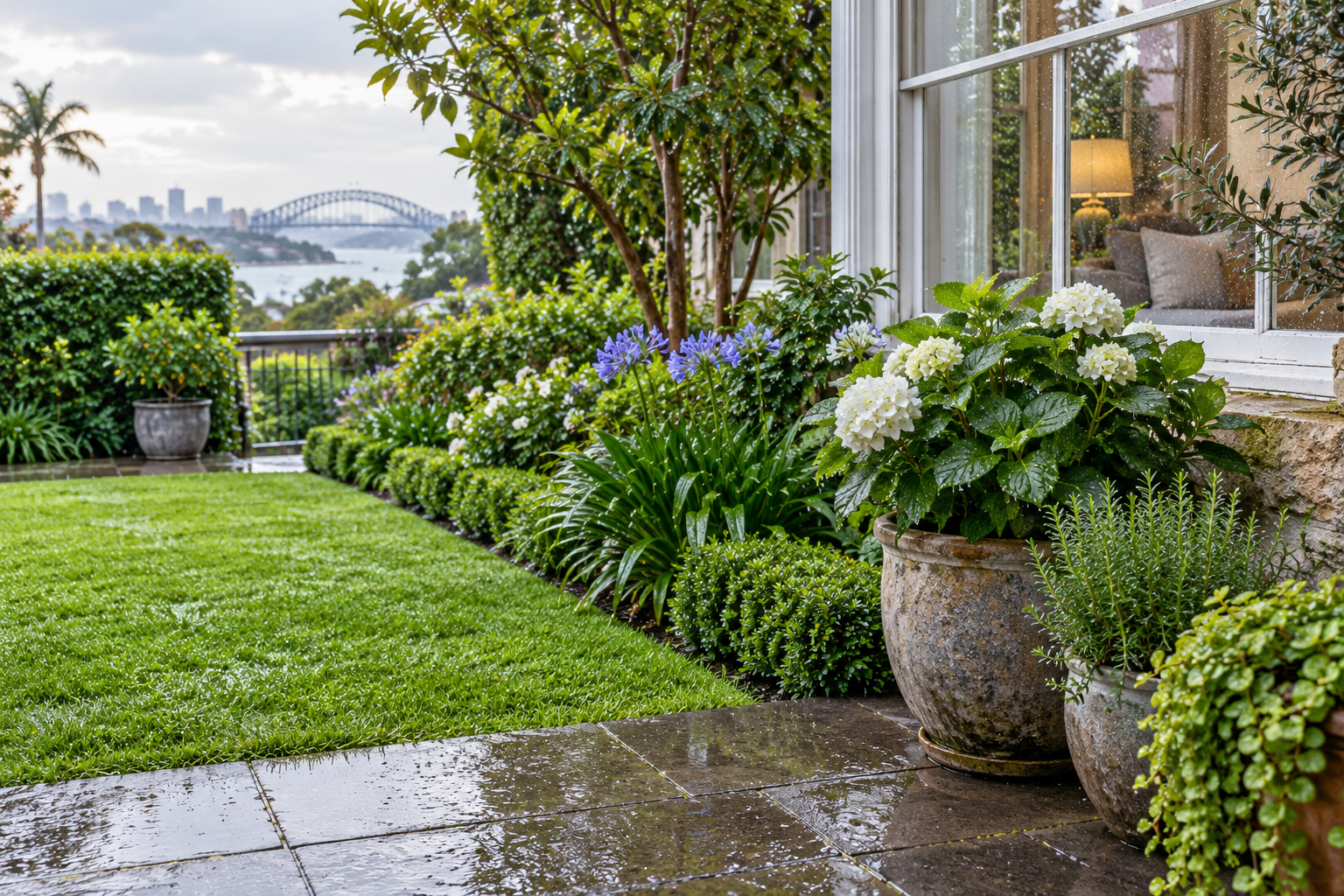
A Sydney garden grows fast in November, and the same mild, damp conditions that bring on soft new growth also suit a group of insects that feed by piercing the plant and drawing out sap. They are mostly small and easy to miss until the leaves begin to curl or the foliage turns sticky. Because they do not bite people and a low level is normal, there is no reason to reach for a broad spray at the first sighting; careful observation and a few targeted steps are usually enough.
1. What sap-sucking pests are
Several different insects cause the same type of damage, and they can appear together on the one plant.
- Aphids are small, soft-bodied insects that gather in dense clusters on young shoots, buds and the underside of leaves. Their colour varies, so shade alone is not a reliable guide.
- Scale insects look like small, fixed bumps on stems and leaves rather than moving insects. Soft scale produces a noticeable amount of sticky waste.
- Whiteflies are tiny white winged insects that fly up in a small cloud when the plant is disturbed.
- Mealybugs form soft white cottony patches, often tucked into leaf joints and under rims.
All of them feed on sap rather than chewing holes in the leaf, which is why the damage and the sticky residue, rather than the insect itself, are often the first thing a gardener notices.
2. How to recognise the damage
As the insects feed, the plant loses fluid and the new growth can distort. Look for curled or twisted leaves, yellowing, stunted shoots and buds that fail to open. A clear, shiny film on the upper surface of leaves, or on furniture and paving below an affected plant, is honeydew, the sugary waste the insects excrete. A dark, sooty mould may later grow on that film.
Check fresh shoots and the undersides of leaves, not just the top of the plant.
Look for sticky, shiny leaves and any dark sooty coating.
Note fixed bumps on stems, which are likely to be scale.
Sooty mould does not itself infect the leaf; it grows on the honeydew, so clearing the sap-sucking insects and the ants that guard them is what allows the plant and the surface below to recover.
3. Why ants appear and protect them
Ants are fond of honeydew and will climb an affected plant to feed on it. In doing so they disturb and drive off the natural predators, such as ladybirds and lacewing larvae, that would otherwise keep aphid and scale numbers down. A steady trail of ants moving up a trunk is therefore a useful sign that a sap-sucking pest is established, even where the insects are hidden from view.
Managing the ant trail lets the garden's own predators work and often makes the difference between a problem that settles and one that keeps returning. It is more useful than simply spraying the visible aphids while the ants remain to protect the next generation.
4. Why warm, wet storms trigger them
The Bureau's forecast for Sydney on Tuesday is showers and a possible storm, with warm, humid conditions, before the week dries and clears. This combination encourages rapid, soft growth and lets sap-sucking insects multiply quickly, because many of them reproduce over a short cycle on fresh shoots. Humid, still conditions also suit scale and mealybugs tucked into protected parts of the plant.
Heavy rain can knock some exposed aphids off the foliage, which is one reason a light outbreak may ease after a storm, but it does not reach fixed scale or insects sheltered under leaves and in leaf joints. Checking the garden once the weather settles, rather than assuming the rain has cleared everything, gives an early read on what remains.
5. How to manage the garden
A healthy, established garden tolerates a low level of these insects, and the calmest approach is to support the predators that already live there.
Squash small clusters by hand or remove badly affected shoots, and rinse plants with a firm jet of water.
Avoid over-feeding with nitrogen, which pushes out the soft growth the pests prefer.
Manage the ant trail and avoid broad sprays that kill ladybirds and other helpful insects.
If a registered horticultural oil or soap is needed, particularly for fixed scale, it works by contact and must cover the insect, with repeat timing usually set out on the current label. The APVMA explains correct chemical use. Do not improvise mixtures or use a broad household spray that also removes the garden's natural predators.
6. When to call a professional
Most small outbreaks on shrubs and vegetables can be handled in the garden, but a professional helps where the problem is large, recurring or hard to reach.
- A large tree or hedge is heavily infested and the sticky honeydew is falling over paving, cars or outdoor seating.
- The pests keep returning, or an ant nest at the base of the plant is protecting them.
- Scale or mealybugs are on indoor or potted plants where garden predators are absent.
- You are unsure what is on the plant and want it identified before anything is applied.
- You manage a strata, rental or commercial property and need a targeted treatment that does not disturb residents or guests.
A technician can confirm the pest, address the ants and apply a registered treatment only where it is needed, while leaving the helpful insects that keep the garden balanced. Identification first avoids both unnecessary spraying and a problem that comes back within weeks.
STICKY LEAVES OR ANTS CLIMBING YOUR PLANTS?
Text your suburb and what you are seeing on the foliage.
Note whether it is curled new shoots, fixed bumps on stems or a shiny film on the leaves below.