
GARDEN & MOISTURE
Snails and slugs in Sydney after wet, stormy late-spring days
A warm, showery weekend with a possible storm is followed by more showers early next week. That is the weather that brings snails and slugs out at night and leaves silvery trails across the path by morning. They are soft-bodied molluscs rather than insects, and the steady answer is to dry the damp spots and remove the hiding places rather than scatter pellets around the garden.
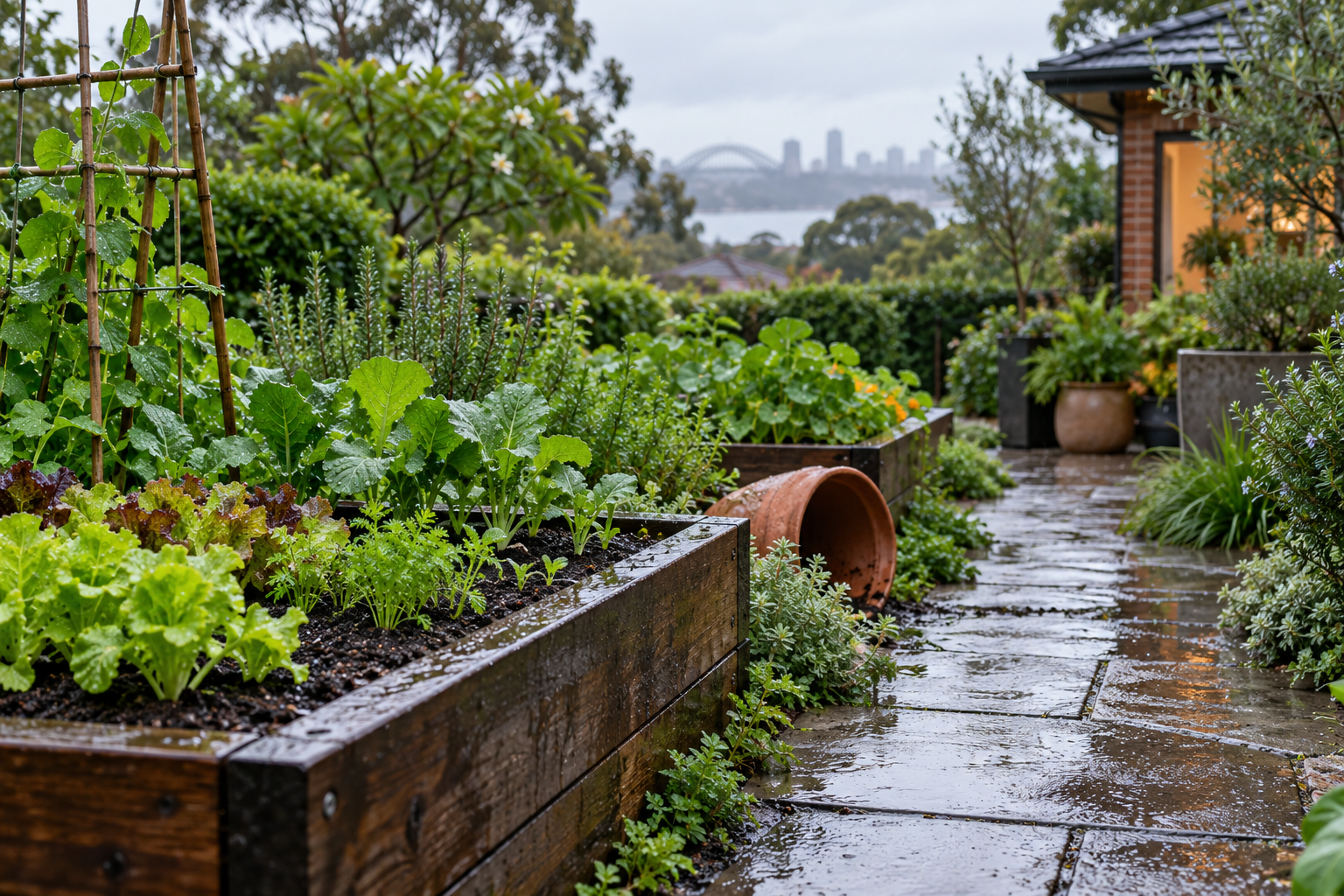
Sydney reaches the last weekend of October with showers and a possible storm on Saturday, a shower or two on Sunday and Monday, and another showery, stormy day on Tuesday. That run of warm, wet weather is when snails and slugs become obvious: holes in the seedlings and lettuce, and glistening trails on the path and the front step. They are a garden problem more than a household one, but when the beds sit close to the door they can wander inside, and the same dampness that suits them also suits other moisture pests.
What snails and slugs are
Snails and slugs are molluscs, the same broad group as shellfish and octopus, rather than insects. A snail carries a coiled shell it can retreat into, while a slug is shell-less and lies flat and close to the ground. Both move on a single muscular foot and lay down the silvery mucus that dries into the familiar shiny trail. They breathe through an opening on the side of the body and feed with a rasping tongue that scrapes holes in leaves, flowers and soft fruit.
They are easy to tell apart from the other damp-garden creatures. Springtails are tiny jumping insects, woodlice are small grey crustaceans that roll up, and earwigs have pincers at the tail. None of these leaves a long silvery trail or the broad, smooth holes in seedlings that point to a snail or slug.
Why wet, stormy weather brings them out
Snails and slugs lose moisture quickly through their skin, so they avoid dry, sunny days and become active when the air is still and humid. The warm rain of a late-spring storm softens the soil, freshens the new growth they feed on and lets them move freely overnight. By day they shelter from the sun, and the trails and damaged leaves are usually the first sign that they were feeding in the night.
A run of showery days matters more than a single wet afternoon. When the ground stays damp for several days and the beds never fully dry, the population can build quickly, and eggs laid in the moist soil hatch into a fresh wave. The return to partly cloudy and sunny weather later in the week is the moment to dry the beds and break that cycle.
Where they hide by day
A short walk around the garden in daylight finds the cool, damp spots they retreat to.
- Under pots, saucers, pavers, mulch and any timber or boards lying on the soil.
- Among dense groundcover, leaf litter and low foliage against a fence or wall.
- Around the base of tap stands, irrigation boxes and overflow points that stay wet.
- In the vegetable patch and among seedlings, lettuce and tender herbs.
- Along the wall footings and door thresholds that lead inside.
Find the damp spots before treating
Snails and slugs will keep returning while the shelter and moisture remain, so locating the wettest spots is the first and most useful step.
Follow the silvery trails back to the bed or pot they came from.
Turn over pots, saucers and pavers to check the undersides.
Look for overwatered beds, leaking taps and blocked drainage.
Check the wall footings and door seals beside the affected beds.
Reduce the numbers and protect the plants
Once the damp spots are known, a mix of drying, hand removal and simple barriers keeps the plants protected without turning the garden into a baiting area.
Water in the morning and avoid overwatering so the surface dries by night.
Clear leaf litter, loose boards and thick mulch away from the house and vulnerable seedlings.
Collect snails and slugs in the early evening or after rain and remove them.
Use a copper band or barrier around raised beds and keep door seals and thresholds sound.
Snail and slug pellets are not harmless: they can poison dogs, cats, birds and other wildlife that eat the pellets or an affected animal, and loose pellets are easy for a pet to find. If a registered bait is used, it must be applied to the current label, placed where pets and wildlife cannot reach it and never scattered; the APVMA explains correct chemical use. Drying the beds and removing the hiding places is the safer first step and is usually enough.
When to arrange a service
Most garden snails and slugs settle once the weather dries and the shelter and excess moisture are removed. A service is worth arranging when the problem is persistent, indoors or tied to a commercial growing area.
- Large numbers return after every wet spell despite drying and clearing the beds.
- Snails or slugs keep appearing inside the house, garage or storeroom rather than staying in the garden.
- You run a nursery, market garden or cafe planter box and need the moisture and access points traced.
- You are unsure whether the damage is from snails, slugs or another garden pest and want it identified.
- Pets or wildlife make baiting unsafe and you need a pet-safe plan.
A technician can trace the damp route, advise on drainage and barriers and place any treatment carefully so it supports the drying work rather than replacing it.
SNAILS AND SLUGS WON'T CLEAR?
Text your suburb and where the trails appear.
Note whether they are in the vegetable patch, under pots or near a door, and whether you have pets.