GARDEN & MOISTURE
Springtails in Sydney after the late-spring showers return
After a couple of dry, sunny days, Sydney turns showery again at the weekend, with an early storm possible. Tiny insects that spring off the soil, gather on the balcony or float on the pool are usually springtails. They do not bite or damage the house; they are a sign of damp, and the fix is to dry the areas they are breeding in rather than spray them.
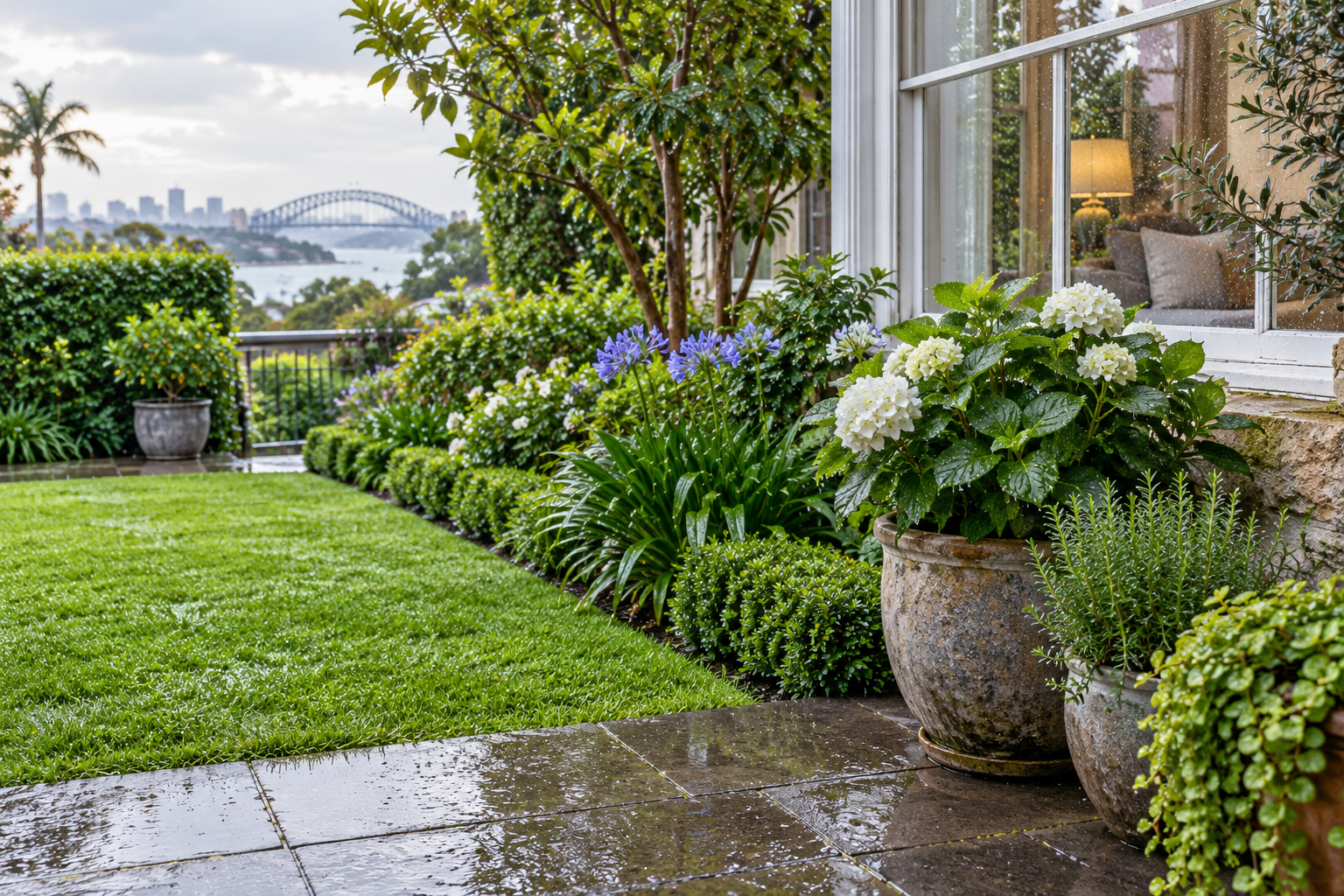
Sydney enjoys two dry, sunny days to end the week before showers increase on Saturday and a storm is possible early on Sunday. In the garden and around the house, that wet turn has a familiar result: thousands of minute insects appear on the soil, on damp paths and around the windows, and a few hop indoors. They are springtails, and while the numbers can look alarming, they are harmless and settle quickly once the damp is addressed.
What springtails are
Springtails are very small, soft-bodied insects, often only a millimetre or two long, that live in soil and leaf litter and feed on mould, fungi and decaying matter. They take their name from a small fork under the body that flicks them into the air when disturbed, which is why they appear to jump rather than fly.
They do not bite people or pets, do not eat healthy fabric or timber, and do not carry disease. They are useful in the garden in normal numbers, helping break down organic material. They only become a nuisance when damp conditions let their numbers build and they move onto paths, walls and into the house.
Why the showers bring them out
Springtails breathe and reproduce best in constant moisture and dry out quickly without it. When showery weather wets the soil, mulch and new turf, mould grows and the insects multiply. As the ground becomes saturated, they move upward and outward to the surface, and can be washed or hop toward the house, gathering on damp walls, window sills and the edges of slabs.
Because they are weak travellers and stay close to damp ground, a cluster of springtails almost always points to a wet area within a short distance. Following them back to the wettest spot is faster than treating the wall or window where they are only gathering.
Where they gather
A short walk around the property after the showers usually finds the source.
- Pot plants and their saucers, especially plants watered daily or kept in the shade.
- Newly laid turf, topsoil and thick mulch held damp against the house.
- Damp paths, retaining walls and the edges of slabs where water pools after rain.
- Wet bathrooms, laundries and under-sink cupboards, and around slow leaks.
- The surface of the pool and spa, where they blow or fall in after rain.
Dry the moisture they depend on
Since springtails cannot survive long in dry conditions, moisture control is the highest-value step and usually settles the problem within a few days.
Let the top of potting mix and new turf dry between watering and empty plant saucers.
Clear pooled water from paths, trays and the base of walls.
Ventilate bathrooms and laundries and check under sinks for slow leaks.
Improve drainage where the soil stays saturated against the slab.
Outside and inside steps
A few simple changes reduce the damp habitat and keep the insects away from the house.
Pull mulch and leaf litter back from the slab and keep it loose rather than deep and wet.
Move damp pot plants away from doors and windows for a few days.
Fit a door sweep and seal gaps at the base of damp walls.
Vacuum the insects gathering indoors rather than spraying the wall.
There is no need to spray pot plants, food areas or the soil for springtails; a spray does not remove the damp that is causing them. If a registered product is used anywhere, it must be applied to the current label; the APVMA explains correct chemical use. Treat springtails as a moisture warning: numbers that keep returning usually point to a drainage problem or a hidden leak.
When to ask for help
Most springtail activity clears within a week of drying the soil and fixing leaks. A service is worth arranging when they keep returning despite these changes.
- They continue gathering indoors for more than a week after watering, drainage and leaks have been addressed.
- The source appears to be under a slab, in a wall cavity or in a sub-floor that stays wet.
- A new build or renovation has persistent damp and the insects keep appearing.
- You run a childcare, pool or retail tenancy and need the damp entry points identified.
- You are unsure what the insects are, or they appear alongside mould that also needs attention.
A technician can trace the damp source, check the slab and wall edges and place a targeted treatment that supports the drying work rather than replacing it.
SPRINGTAILS KEEP RETURNING?
Text your suburb and where they gather.
Note whether they are on the soil, a damp wall, pot plants or indoors, and how long after the rain they appeared.