MOVING & STORAGE
Self-storage unit pests in a Sydney spring: pack so nothing moves in
Spring tidy-ups, house moves and renovations push a lot of clothing, books, bedding and furniture into storage units. Those same boxes are exactly what clothes moths, carpet beetles, silverfish and rodents need. A few packing choices on the day make all the difference when the unit is opened in summer.
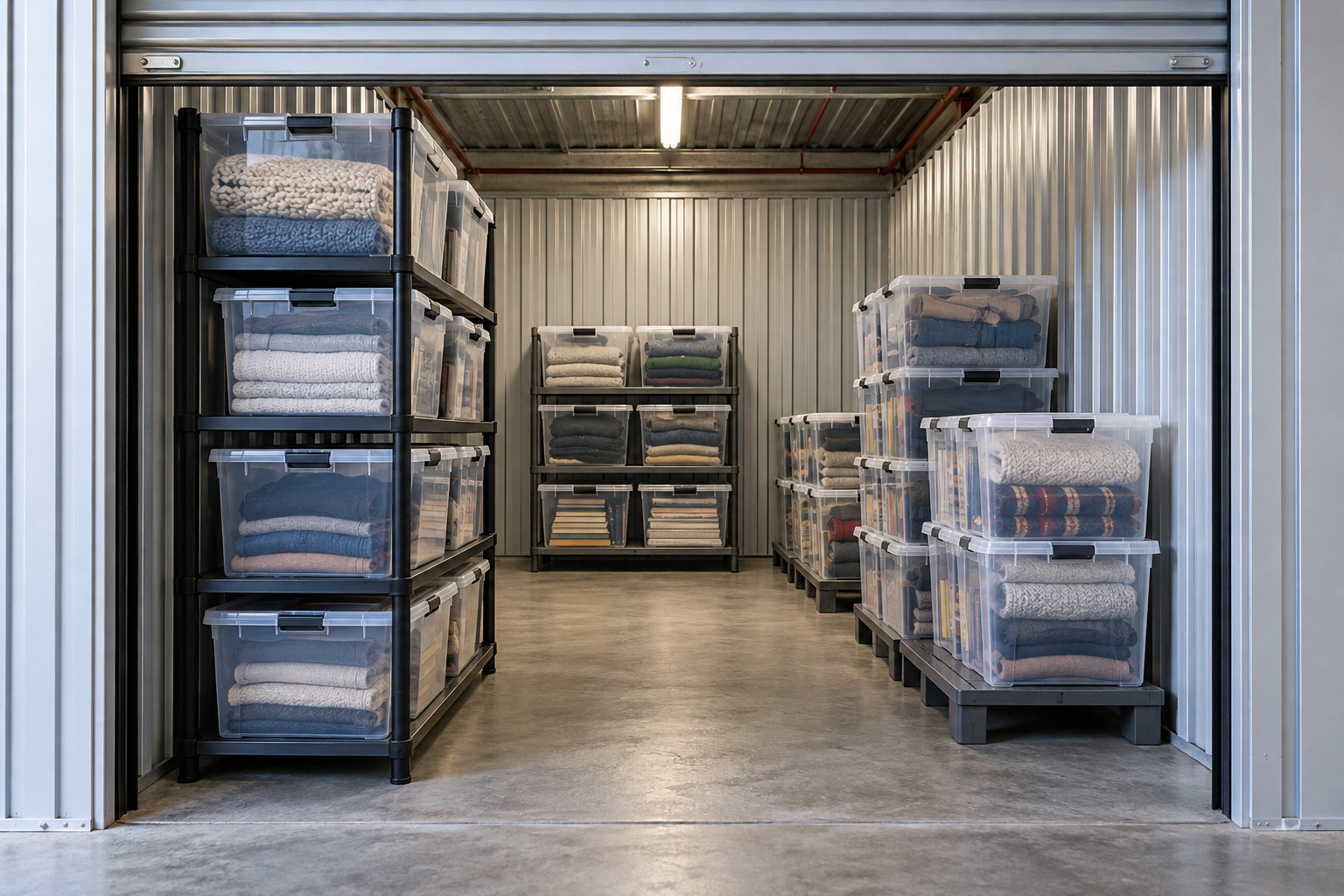
A storage unit is undisturbed, often dim and sometimes cooler and damper than the house, which is a close description of what storage pests look for. In a warm, showery Sydney spring the contents can be quietly damaged for months between visits, and by the time a tenant finds chewed fabric, cast skins or droppings, the problem may be shared with neighbouring units. The work happens in two places: choosing a sound unit on the day, and packing it so that pests have no food, no moisture and no cardboard to nest in.
Why spring storage is vulnerable
October is a popular month to clear wardrobes, swap winter bedding for summer linen, and make room before a renovation or move. The boxes heading into storage often carry exactly what pests eat: unwashed wool and knitwear, hair and lint on clothing, crumbs in picnic gear, paper and glue in books, and sometimes pet food or bird seed packed for convenience.
The facility itself adds the environment. Ground-floor and underground units can stay damp after a showery week, doors share walls with other tenants, and roller doors leave a gap at the base that mice and insects use. A storage pest problem is rarely caused by a single box; it is usually the combination of stored food, moisture, undisturbed cardboard and a way in from the facility.
Which pests move into stored goods
Knowing what each pest eats tells you what to pack carefully. The same vulnerable groups appear in storage units across Sydney, and none of them need to be in the box with the goods.
- Clothes moths favour soiled wool, cashmere, silk, fur and feathers; the small cream caterpillars, not the adult moths, do the grazing, leaving threadbare patches and webbing.
- Carpet beetles and their larvae feed on wool, felt, feathers, pet hair and dead insects in stored rugs, blankets, jackets and upholstered furniture.
- Silverfish and similar paper-feeding insects chew bindings, labels, documents, photographs and the glue in cardboard, especially in damp units.
- Booklice and mould-feeding mites appear where stored goods have gone damp during a humid, showery spell and indicate a moisture problem rather than a fabric one.
- Mice and rats follow any food, seed or crumb and will shred paper and fabric for nesting once the roller door gap or a wall cavity lets them in.
Choose and inspect the unit before you rent it
Spend five minutes inspecting the actual unit before the paperwork is finalised. A good facility will not mind a prospective tenant checking corners, and what you see predicts what your goods will live in for months.
Choose a dry, elevated unit away from known damp ground; sniff for mustiness and check walls and the floor for water marks.
Look at corners, the roller-door base and shelving for droppings, smear marks, gnawing, nests or live insects.
Check the door seal and the gap at the base, and note any large gaps or damaged panels to report before moving in.
Ask how the facility manages pests, bin areas and drainage, and how shared problems are reported.
Pack so there is nothing to eat and nowhere to nest
The contents of the unit should be clean, dry and sealed before they arrive. Pests are moved into storage far more often than they walk into it, so the packing bench at home is where most problems are prevented.
Wash or dry-clean every garment before storage, including winter coats and knitwear; moths are attracted to clothing worn next to skin.
Pack clothing, linen and books in smooth, lidded plastic tubs rather than cardboard, which holds moisture and is itself food and nesting material.
Vacuum rugs, upholstered furniture and mattresses, let them air fully dry, and cover them with purpose-made storage wraps rather than unvented plastic.
Leave pallets or a gap between boxes and the floor and walls, and do not stack bedding against the roller door.
Keep all food, pet food, bird seed, kitchen appliances with crumbs and picnic baskets out of the unit entirely.
Visit through the showery weeks if you can, especially during a long rental. A quick look at the door line, the corner boxes and the floor catches a damp or rodent problem early, when it is still confined to one area.
What not to do
Do not scatter loose naphthalene flakes or mothballs through the unit or inside garment bags: they are regulated products, they can stain and contaminate fabric and food, they do not control rodents, and loose use in a shared facility is a hazard to other tenants. Do not spray insecticide directly onto clothing, books, leather or furniture; where a registered product is warranted, use it only for its intended setting and follow the current label — the APVMA explains correct chemical use. A pest problem in a shared facility should be reported to the manager so the building itself is treated rather than treated unit by unit.
When to ask for help
If the same pests appear at home after a visit to the unit, or furniture and boxes come out damaged, the infestation may already be travelling between the two addresses, and treating only one side will fail.
You find droppings, gnawing or live rodents in the unit or notice them at home in the same weeks.
Multiple boxes show moth webbing, cast skins or threadbare woollens despite clean, sealed packing.
Contents are coming out damp, mouldy or smelling musty, which points to a unit moisture problem rather than an insect one.
Second-hand furniture arriving from storage or a previous address brings carpet beetles or bed bugs into the house.
The facility is unresponsive to a shared rodent or insect problem and you want guidance on documenting and treating your own goods.
A technician can inspect the goods and the home, treat affected furniture and wardrobes correctly, and advise on what can be salvaged and how to re-pack the unit so the spring tidy-up stays intact until collection day.
PACKING A STORAGE UNIT THIS SPRING?
Text what you are storing and how long for.
Mention wool, rugs, books or furniture and whether the unit is ground floor, and we can help with a pre-pack inspection or a problem that has already followed the boxes home.